xplan
111 Topics🤓 Xplan Hint: Email Signatures That Stick!
Did you know Xplan recently updated how email and SMS signatures work when using the 'Override From Address' option? Why the Change? No more worrying about an email going out with the wrong signature The system now guarantees the signature always matches the sender based on the chosen 'From address' It ensures consistency across your communications How It Works Now Signatures are now dynamically appended at the time of send, not when you're drafting the email. This applies to personal, site, and group signatures. Signatures are no longer inserted into the content when creating an email, SMS, or selecting a template. The correct signature is appended based on the selected 'From address' when the email is sent. Editing a pre-loaded signature before sending is no longer an option. For bulk emails, when previewing, the signature shown is determined using the first client. The sender’s signature is no longer included in the message for notifications or acknowledgements. This updated signature handling applies to: Scheduled Email Tasks, Single Email, Email to All, Campaigns, Portfolio Positions, and Diary. Pro Tip 💡 If you frequently use the 'Override From Address' feature, perhaps covering for a colleague or sending on behalf of a different adviser, this update is a massive win! It eliminates the risk of human error in manually adjusting signatures, making your compliance team very happy.170Views3likes14Comments
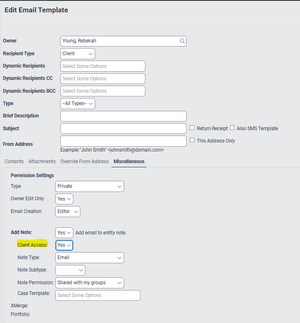
Settings for client access to emails saved as Doc Notes
Does anyone know if or how I can change the standard setting in the client email template so that: Client Access = No At the moment the default is set to yes (as screen shot below) Any advice would be much appreciated.. thank you65Views1like3Comments🤓Xplan Hint: Why not try a dynamic benchmark?
Are you using Benchmark Sets in your Cases? Have you found that sometimes, some benchmarks are simply not applicable or relevant to the client's scenario? For example, why would you complete a Risk Researcher scenario when you are providing advice on a Family Trusts investments only? You should try Dynamic Benchmarks! These will only activate and append benchmarks that are relevant to the individual client’s scenario. If you have a client who is proceeding with advice and requires a document generated with modelling scenarios, these benchmarks can be configured to only pop up at the time of selecting “client wishes to proceed to advice” in your process and completing an advice discussion file note. The benefit of using Dynamic Benchmarks over standard Benchmark sets is that you aren't left at the end of your workflow process with a list of incomplete benchmarks which are stopping the case from closing. To go through an example of a Dynamic Benchmark set up, visit the Iress Community page here: Dynamic Case Benchmark Example - Iress Community Or to learn more, visit the Iress Learning Centre: Dynamic Benchmarks.15Views0likes1Comment🤓Xplan Hint: DBFO consent comes to Xplan Risk Researcher
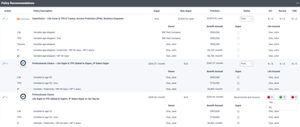
Did you know Risk Researcher now enables you to document client consent for insurance commissions? As many of you know, from 9 July 2025, advisers providing personal advice on life insurance will need to obtain informed client consent before implementing advice or receiving commissions. (Delivering Better Financial Outcomes (DBFO) Act 2024,) Now, you can easily record client consent using the new Insurance Commission Consent (ICC) column in Risk Researcher’s recommendations screen. It allows you to indicate whether consent has been received for each product you recommend. And yes, there’s new merge syntax available so you can include the details in your documents. This update was the result of conversations with several of you. Many shared that consent would typically be captured in their Advice documents (e.g., ATP) or other consent forms. For more information, check out the community article Meeting DBFO informed consent requirements in Xplan. Now that Risk Researcher supports consent tracking, and lets you include it in your documents, we’re also thinking ahead. Are there other ways you’d like to use this data? We’d love to hear your thoughts around any other use cases you see for insurance fee consent. Let us know in this thread!102Views2likes3Comments🤓 Xplan Hint: Policy Search
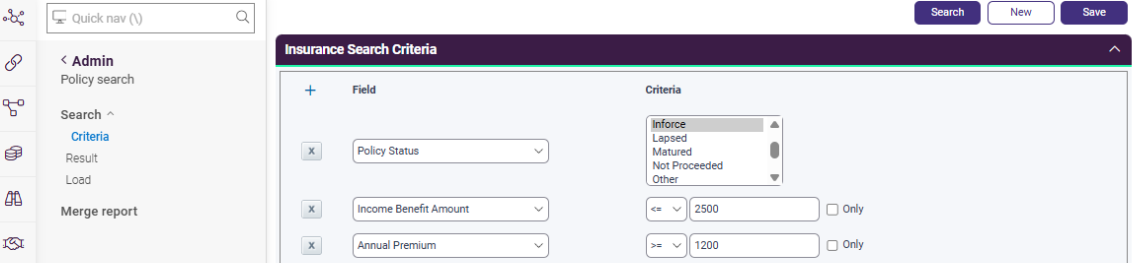
Did you know you can quickly and easily interrogate client insurance policy details using the Policy Search feature in Xplan? Policy search is specifically designed to search across existing insurance policies - it enables targeted searches that would be difficult to achieve with regular advanced search criteria. Ever wanted to segment clients based on policy attributes such as the type of cover, renewal dates, annual premium or product provider? Policy search enables you to tailor communications and service offers to clients meeting specific criteria, improving client engagement and service delivery. Select Admin from the left-hand navigation menu then choose Business > Policy search and select from the comprehensive criteria options. You can save criteria to use again or choose bulk actions to email the policy owner or life insured or merge the details into a Xmerge report. What would you use this feature for? Would it help you target clients for review? Share specific updates on product or industry changes? Engage clients with or without certain policy features in educational campaigns? I'd love to hear from you.107Views2likes8Comments🤓 Xplan Hint: Tracking Super Contributions
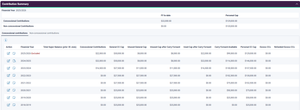
Did you know that there is an element that summarises Super Contributions. It gives you a clear and consolidated view of your client's superannuation contributions, making tracking and compliance easier than ever. Key Features at a Glance Tracking: The element calculates the total sum of concessional (CCs) and non-concessional contributions (NCCs) for each financial year. Historical Data: Contribution tracking starts from the 2018/2019 financial year onwards. How the Data is Calculated The contribution figures are calculated based on the data entered in the Contributions tab within the superannuation plans. Flexibility and Compliance Details Manual Overrides: You have the option to manually override the calculated figures for both CCs and NCCs if needed. This is done via the Edit screen for the specific financial year. While in the Edit screen you can also capture: Total Super Balance (TSB) Refunded Excess CCs Refunded Excess NCCs Notes and Document linking You can link a Note to easily consolidate all relevant documents/statements for each financial year's contributions in one place, which helps keep all relevant information organized. Xtools/Xtools+ Contribution Cap Calculations The Super Contribution Summary is about to get even more powerful! Contribution cap data will be imported into the following Xtools: Xtools+, Optimiser, Retirement Funding, TTRAP and Lifestyle Goals. Cap Calculations Xplan will calculate your client's Personal Concessional and Non-Concessional Cap data by leveraging the existing Contribution Summary information. Concessional Contributions (CCs): The system will calculate your client's unused and used concessional cap for each financial year, using previous eligibility for the carry-forward rule. Non-Concessional Contributions (NCCs): The system will determine the financial year in which your client has triggered the bring-forward rule. If you can't see the Contribution Summary on your Xplan site, reach out to your site administrator to have it added to the interface. For more information refer to this Community article56Views1like0CommentsThursday 13 November AMA: Kenny Foo, Xplan implementations expert, Ask Me Anything!
Want to know how the best structure their access levels? Or how often good site administrators review their assumption sets or update APLs? Or maybe there is a system setting you've never quite worked out. This is your chance to ask the questions that matter to you most. If it’s to do with running your practice, there’s a good chance Kenny can make Xplan more efficient for you. He's here to help! Here are some topic areas to get you started: Best hierarchy structures for Xplan? successful onboarding / off-boarding process examples Mastering user group management policies Join Kenny here on Thursday the 13th of November from 3pm -4pm AEDT Start popping in your questions below and Ask Me Anything!228Views1like20Comments🤓Xplan Hint: Link to another Xplan page
Did you know you can add hyperlinks to another page in Xplan? This is useful if you want to direct users in Xplan to another client or wizard page. One example is if you want to direct a user to the job queue after completing a wizard doc merge, so they can see where they are in the queue. Check out this Community piece for instructions. Can you think of other ways to use this feature? Let us know!26Views1like0Comments🤓 Xplan Hint: Editing existing insurances inside Risk Researcher
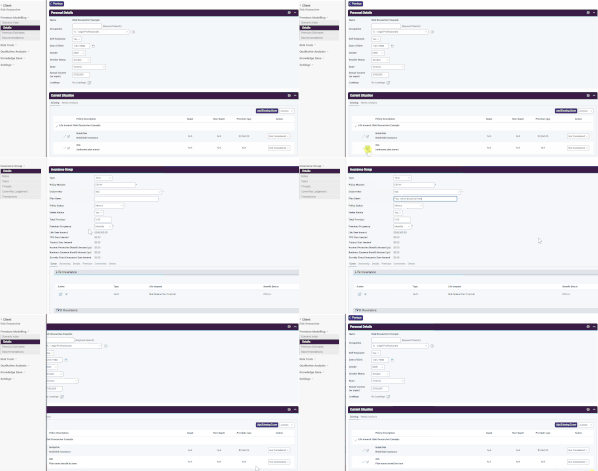
Did you know that you can now edit existing insurances directly within Risk Researcher? A new Edit button has been added next to each existing insurance policy in the scenario. Once clicked, you are redirected to the Client Focus > Existing Insurance section, where you can make the necessary changes. Upon saving the edited policy, you will automatically be taken back to your scenario page, and all policies marked as "not considered" will be refreshed with the updated details. A small change on our end that will help make a huge difference to the quality of your data on your end!17Views0likes0Comments