The Planner Who Wanted To Help Everyone
Jennifer was one of the good ones.
She built her business in Adelaide from the ground up, one client at a time, one conversation at a time, one late night at a time. Her motivation was simple: to help people. If someone reached out, she would listen. If they needed advice, she would give it. If they couldn’t quite afford her fee, she would find a way to make it work.
In the beginning, this was her advantage. Clients adored her warmth and generosity. They told their friends, who told their families, and before long, Jennifer’s small practice had become one of the most respected advice firms in South Australia.
When asked what made her successful, Jennifer always smiled and said, “If someone knocks on my door, I’ll help them.”
It was a philosophy that served her well, until it didn’t.
The Tipping Point
Eighteen years later, Jennifer’s firm was an established business with a strong brand, a loyal client base, and a capable team. There were two senior planners, a junior planner, and an administrative team that kept the wheels turning.
On the surface, things looked great. The numbers were steady, the office was full, and the marketing engine was humming. But under the surface, the cracks were showing.
The team was stretched. Deadlines were tighter. The planners were working longer hours. And the feeling in the office, once light and energised, had become quietly strained.
Jennifer noticed it too, but old habits die hard. Whenever the phone rang or a new enquiry came in, she couldn’t bring herself to say no.
“We can fit them in,” she’d tell her team. “It’s what we do.”
The Subtle Realisation
It was during a strategic business session with Back Office Hero that Jennifer’s situation became impossible to ignore.
Her practice metrics were solid, but the story they told wasn’t comforting. Client numbers were up, but margins were flat. Staff satisfaction had dipped. Despite growing revenue, the business was no more profitable than three years earlier.
When Mark from BOH asked why she kept taking on every prospect who came through the door, Jennifer said simply, “Because they need help. If I don’t help them, who will?”
Mark nodded. “That’s admirable,” he said. “But how long can you keep helping everyone without losing the capacity to help anyone well?”
The room went quiet. Jennifer leaned back in her chair. “That’s just how I’ve always done it.”
And there it was, the sentence every experienced planner eventually says aloud.
The Habit of Saying Yes
For Jennifer, helping everyone wasn’t just a business choice, it was part of her identity. It was what had built her success. But what she couldn’t see anymore was that the very habit that made her business grow was now holding it back.
Back Office Hero introduced her to the Ideal Client Calculator, a simple but confronting tool. It showed her, in black and white, what her heart had been avoiding.
A third of her clients were paying less than the cost to serve them. Each new planner increased expenses without improving profit. The business was busy, but not efficient.
Jennifer finally understood what she’d been feeling but couldn’t name, she wasn’t tired because she didn’t love her work anymore. She was tired because her generosity had no boundaries.
The Turning Point
The following weeks were uncomfortable. Change always is.
Jennifer met with her team and showed them the data. She admitted, with her characteristic honesty, that she had been saying yes too often and that it was affecting everyone.
“We’ve been running like we’re still a small firm,” she said. “But we’re not. We’ve grown, and our systems need to grow too. We need to protect what makes us good, not wear it out.”
Together, they revisited the client model. They defined what an ideal client looked like, someone who valued advice, sought an ongoing relationship, and saw the worth in paying appropriately for it.
From there, they refined service packages, introduced clearer boundaries, and built systems that allowed the team to focus on clients who matched the firm’s purpose.
When new enquiries came in, they were screened using the Ideal Client Calculator.
Prospects who fell below the threshold were referred elsewhere.
It wasn’t rejection, it was stewardship.
The Gentle Shift
Habits don’t change with declarations, they change with decisions, made quietly, one after another.
Jennifer began to pause before saying yes. She looked at each opportunity through two lenses, does it help the client, and does it serve the business? If it didn’t meet both, she learned to pass.
Her planners followed suit. The office felt lighter. There was time again for team meetings, professional development, and those long-lost client coffees that build loyalty money can’t buy.
For Jennifer, the hardest part wasn’t the system or the pricing, it was the silence that came after saying no. It felt unnatural at first. But as the months passed, that silence began to sound like clarity.
With fewer, better-aligned clients, her planners delivered deeper advice. The admin team finished on time. Client satisfaction improved. And for the first time in years, Jennifer left the office before dark.
She hadn’t just changed her business. She’d changed a habit that had quietly been running her life.
The Moment of Clarity
At the end of the next financial year, Jennifer sat down with her team to review their progress. Revenue was up. Profit margins had improved. Staff turnover was down.
She looked around the table at a team that finally had room to breathe and smiled.
“This is what I always wanted,” she said. “To run a business that helps people and gives us a good life too.”
Mark from BOH smiled back. “That’s what happens when you replace habit with structure,” he said. “You haven’t lost your generosity. You’ve just given it direction.”
The Lesson
Jennifer’s story is familiar to anyone who’s spent years in advice. The drive to help, to say yes, to be the trusted one, is why most planners start. But left unchecked, that same instinct can slowly strangle a business.
There’s no shame in it. It’s human nature. We repeat what once worked until it no longer does.
But growth demands evolution.
The planner who wants to help everyone eventually learns that the only sustainable way to do so is by helping the right people, in the right way, through a business that supports the promise it makes.
That’s what the Ideal Client Calculator helped Jennifer see. It wasn’t just about profit; it was about focus. It showed her that systems and boundaries don’t reduce compassion, they preserve it.
The New Habit
Months later, a younger adviser from Adelaide reached out to Jennifer for guidance.
“Do you ever feel bad turning people away?” he asked.
Jennifer smiled. “Not anymore. I used to think I was saying no to them. But really, I was saying yes to my team, to my family, and to the clients who trust us most. That’s a better kind of help.”
The adviser nodded, thoughtfully. Jennifer could see something of her younger self in his eyes, eager, kind, and determined to do good. She hoped he’d learn the same lesson a little sooner.
Because when you stop trying to be everything to everyone, you discover you can finally be something meaningful to many.
Closing Thought
Back Office Hero doesn’t tell planners to care less. It teaches them how to care wisely. Systems, boundaries, and metrics aren’t barriers to kindness; they’re the structure that allows it to last.
And for Jennifer, the planner from Adelaide who once tried to help everyone, that realisation changed everything.
Now, she runs a business that thrives, a team that breathes, and a life that feels balanced again.
The habit of saying yes will always whisper, but she’s learned to answer it with something stronger, clarity.
And that’s the quiet triumph of a planner who finally learned that helping everyone can sometimes mean starting with yourself.
Welcome to the Advisely forums!
This is where financial advice professionals from all walks of life come together to share knowledge, swap ideas, solve problems, and talk all things growth and efficiency.
Here are some tips when posting in the forums:
- Be respectful and courteous to fellow members
- If a reply helped you, mark it as a solution so other users can find it easily
- Take a moment to read through our Community Guidelines
- For Xplan support issues, it's best to raise a ticket in Iress Connect first. You can also search the discussions for posts about the same issue first before starting a new thread.
- Keep an eye out for our 'Ask me anything (AMA)' threads – these are live text-based Q&As with industry and Xplan experts during a set period of time. Find out when the next one is happening here.
- Don’t be shy! You don’t need to be an expert to help someone out. Many users are looking for practical advice, shared experiences, or just a fresh perspective
- Introduce yourself and meet other members here!
We’re glad you’re here – see you around! 😁

Recent Discussions

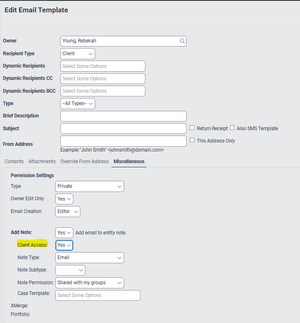
Settings for client access to emails saved as Doc Notes
Does anyone know if or how I can change the standard setting in the client email template so that: Client Access = No At the moment the default is set to yes (as screen shot below) ...rebekah.young5 days agoNetwork Navigator58Views1like3Comments🤓Xplan Hint: Why not try a dynamic benchmark?
Are you using Benchmark Sets in your Cases? Have you found that sometimes, some benchmarks are simply not applicable or relevant to the client's scenario? For example, why would you complete a Risk R...laura.capozzi6 days agoXplan Expert14Views0likes1Comment


Related Content